










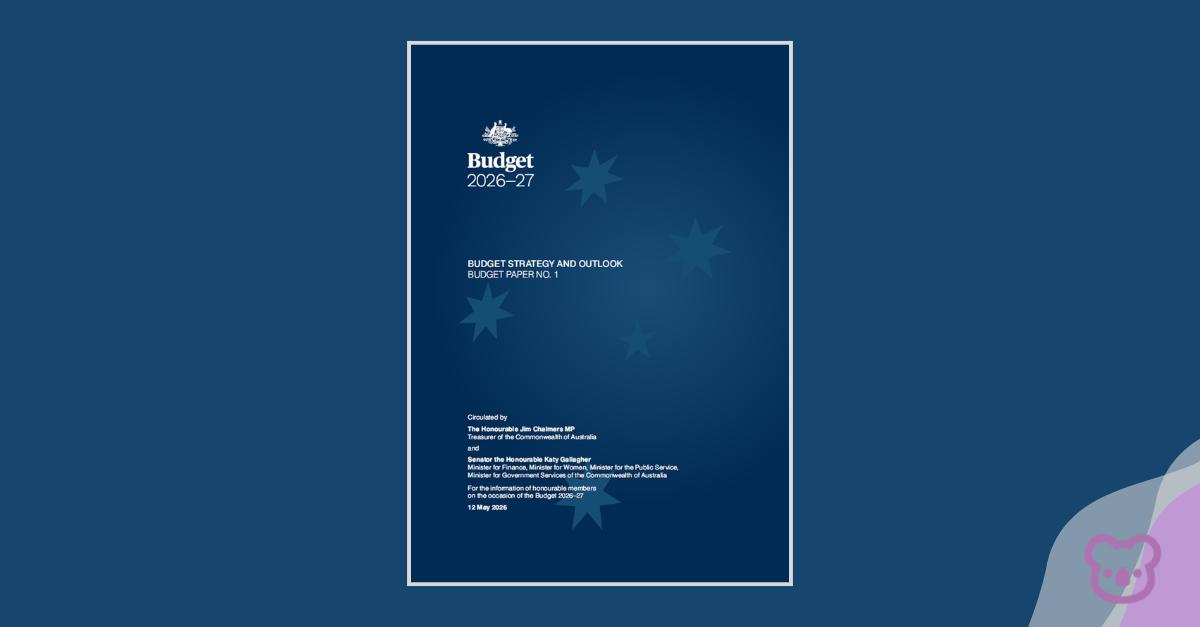
Strengthening the integrity of the migration system, a new levy on all higher education providers, and a forecast continued decline in Net Overseas Migration were included in the Federal Budget handed down by Treasurer, Dr Jim Chalmers last night, in what he described as the “most ambitious budget in decades”.
While the Treasurer made no mention of migration and international education in his speech, the Budget papers tell a different story. A range of measures point to a continued policy focus on tightening migration settings, strengthening visa integrity controls and placing downward pressure on migration numbers, all of which are likely to reinforce the difficult operating environment currently facing Australia’s international education sector.
Student visa integrity
To ensure the integrity of the international student visa system, the Department of Home Affairs will receive an additional $19.8 million over four years from 2026-27 for enhanced security of onshore and offshore student visa applications.
This announcement will be met with trepidation by the international education sector, already reeling from significant declines in visa grant rates in the first quarter of 2026, with rejections which the sector has struggled to understand (TKN 040526).
The additional funding also reinforces the Government’s continued focus on integrity and compliance, with nothing in the Budget to support international education sustainability or market diversification.
International trade
Export growth is forecast to moderate to 1 per cent in 2026-27, before rising to 2 per cent in 2027-28. Treasury forecasts that services exports will grow “modestly” as overseas travel demand is impacted by global uncertainty and “growth in the student stock remains subdued”.
MIGRATION AND VISA SETTINGS
Net Overseas Migration (NOM)
Reducing net overseas migration (NOM) continues to be a focus for this Budget, with the Government stating, “migration policy changes in this Budget will place downward pressure on NOM”.
Net Overseas Migration has declined by around 45 per cent from the 2022-23 peak and is forecast to continue declining through to 2027-28. NOM is forecast to be higher than previously expected in 2025-26 and 2026-27, which is attributed to migrants on temporary visas departing Australia at lower rates than previously.
The 2026 Budget forecasts the NOM as:
- 305,000 in 2024-25 (outcome)
- 295,000 in 2025-26
- 245,000 in 2026-27
- 225,000 in 2027-28, 2028-29 and 2029-30
As a reminder, the 2025 Budget forecast the NOM to be:
- 335,000 in 2024-25
- 260,000 in 2025-26
- 225,000 in 2026-27, 2027-28 and 2028-29
Skilled Migration
The Government will invest $85.2 million for faster skills assessment and acceleration of occupational licensing of migrant trades workers. An additional 4,000 skilled migrant workers could join the workforce each year under these measures.
The 2026-27 permanent migration program level will be set at 185,000 places, with over 70 per cent (132,240 places) allocated to the Skill stream. The Government says it will prioritise applications from onshore migrants across the Skill and Family streams, allocating 129,590 places to migrants already living in Australia.
The remaining places will predominately be allocated to high-skilled migrants, aimed at addressing Australia’s long-term skill needs. The Government will also reform the permanent migration points test, to select better education, higher-skilled and younger migrants overall.
The Government has also flagged the introduction of a skills migration commissioner, with the Department of Employment and Workplace Relations consulting on requirements, with costs to be met from within existing resources.
REGULATION AND ENFORCEMENT
Tertiary Education Quality and Standards Agency (TEQSA)
TEQSA will receive $9.4 million for four years and then ongoing funding to enable it to have stronger enforcement and monitoring powers, and “step in and act when it is justified in the public interest”.
The funding will also enable TEQSA to respond to the recommendations from the 2025 Australian Senate inquiry into the quality of governance at Australian higher education providers and the 2025 Special Envoy’s Plan to Combat Antisemitism.
The devil is in the detail on this one, however, as the Budget papers also go on to say that the cost of the measure will be paid for from TEQSA’s existing cost recovery arrangements and reprioritisation of funding from within TEQSA.
National Student Ombudsman
From 1 January 2027, the National Student Ombudsman will introduce a levy on all higher education providers registered with TEQSA to fund its operation. According to the Government this will “support students and drive change in the higher education sector through the delivery of a single, national mechanism for resolving student complaints”.
This measure is expected to return $33.2 million over three years from 2027-28 and $11.3 million per year ongoing.
OTHER RELEVANT BUDGET MEASURES
Housing
A ban on purchases of existing residential properties will be extended until 20 June 2029.
Temporary Graduate Visas
Although an uplift of Visa Application Charge for Temporary Graduate visas appears in the Budget papers, this measure was provisioned in the 2025–26 Mid-Year Economic Fiscal Outlook and took effect from 1 March 2026. It is not an additional increase.
Working Holiday Makers
The Working Holiday Maker (WHM) program will be reformed to “better control numbers”, a measure that is likely to be welcomed by an international education sector concerned about the blowout in WHM visa holders in recent years and the impact on NOM.
Government response to the Bondi terrorist attack
The Budget contains a range of measures to address antisemitism in the wake of the Bondi terrorist attack at the end of 2025. The measures will include new visa refusal and cancellation grounds, and character test provisions under the Migration Act 1958.
Addressing misuse of the protection visa system
The Federal Court of Australia and the Federal Circuit and Family Court of Australia (FCFCOA) will receive $74.2 million over four years to address misuse of the protection visa systems.
PORTFOLIO BUDGET STATEMENTS (PBS)
Portfolio Budget Statement – Education
There are no material changes to Program 2.7, International Education Support, in this year’s PBS. There is also only one performance measure and corresponding planned performance result in the Education PBS, and it is the same as one of the 2025-26 measures:
| Performance measure | Planned performance results |
| Proportion of international students employed within 4 to 6 months of completing a degree | Target: 70% or higher |
Interestingly, the other measure in the 2025-26 Budget, an increase in the number of students enrolled in offshore education and training delivered by Australian providers, has been dropped from this Budget’s PBS, with the notation:
“The performance measure has been removed from 2026–27 onwards as it is primarily driven by variables outside the department’s control and therefore is not an accurate indicator of the department’s performance in supporting the sustainable growth of high-quality higher education and research under Program 2.7. The department will consider other performance measures for this program in a future reporting cycle. The 2026–27 Annual Report will continue to report on this metric outside the annual performance statements”.
Portfolio Budget Statement – Employment and Workplace Relations
The Australian Skills Quality Authority lists two relevant activities under Program 1.1 – Regulation and advice, although it does not list specific performance measures or performance results:
- maturing our approach to the regulation of Australian VET offshore
- monitoring and responding to the international VET sector’s adjustment to sustainability measures, including support for affected students
Portfolio Budget Statement – Foreign Affairs and Trade
There were no material changes announced in last night’s budget to Program 1.5, New Colombo Plan – Transforming Regional Relationships. And despite the PBS noting that it will strengthen the New Colombo Plan including reinforcing its emphasis on learning the languages of the region, there continues to be no changes to appropriation of $50.9 million through to 2029-30.
| Performance measure | Planned performance results |
| The New Colombo Plan contributes to young Australians’ Indo-Pacific knowledge, capability and connections. | Target 1: 400 Australian university undergraduates awarded a New Colombo Plan scholarship to study in the Indo-Pacific region.
Target 2: 20% of the Australian university undergraduates awarded under the New Colombo Plan have a planned language-learning component(s) for scholarships, semester and mobility programs. |
Portfolio Budget Statement – Australian Trade and Investment Commission
Although there is a separate throwaway line about driving growth in education travel, Austrade now only specifically contributes to international education through the Department of Education’s Program 2.7 (see above), noting that:
“The Department of Education and Austrade collaborate to align policy and program delivery to improve Australia’s quality international education sector, complementing Austrade’s focus on enabling a sustainable, diverse and high-quality international education sector.”
Previous years’ references to assisting clients to promote Australian education to international students have disappeared entirely from the PBS. The contrast with Austrade’s once prominent international education marketing role is striking.
Portfolio Budget Statement – Home Affairs
There are no material changes in the PBS for Program 2.1, Migration and Program 2.2, Visas, however, as above there are significant additional measures in the Budget that will be administered by Home Affairs.
Although many of the measures are framed around integrity, regulation and migration management, the Budget is likely to reinforce sector concerns about ongoing uncertainty in international education policy and the continued lack of measures aimed at supporting sustainable sector growth.











